
Start with the symptom, not a theory about the gut
Describe the problem in everyday terms. Is stool hard or painful to pass? Does the child avoid the toilet, eat less, wake with discomfort or accept fewer foods than before? Can they chew and swallow comfortably? A change in behaviour may be a way of communicating pain, especially when describing bodily sensations is difficult.
Avoid assuming that all distress is “just autism”, but also avoid assuming that every difficult day comes from the gut. Sleep, demands, sensory experience, illness and communication can all matter. Seek prompt medical care for persistent vomiting, blood in stool, dehydration, severe pain or concerning weight loss. A food experiment is not the first response to an acutely unwell child.
Constipation can become a self-reinforcing problem
A painful bowel movement can lead a child to delay going again. Holding stool can then make the next bowel movement harder and more uncomfortable. Families may notice withholding movements, fear of the toilet or soiling and not immediately recognize constipation as a possibility.
Assessment should consider the history, medicines, growth and any warning features. The American College of Gastroenterology describes behavioural and medical elements of management; a clinician should tailor the plan. Simply telling a child to try harder, or repeatedly changing supplements, may miss the cycle of pain and avoidance. Ask for clear instructions, what improvement should look like and when to return if the plan is not working.
Source: American College of Gastroenterology: constipation in children.
Selective eating: look beyond willingness
A narrow food range can involve texture, smell, temperature, predictability, pain, oral skills or anxiety around unfamiliar food. “Picky eating” is a description, not an explanation. Record which foods are accepted reliably and what characteristics they share. A child who accepts crunchy foods but struggles with mixed textures presents a different question from one whose intake has suddenly fallen.
A feeding assessment may need input from medical, dietetic and developmental professionals depending on the concern. The aim is adequate nutrition and a less distressing eating experience, not winning a contest over a bite. Discuss small, realistic changes with the team. Avoid withdrawing all familiar foods to force acceptance; a child still needs dependable access to nutrition while new strategies are explored.
The gut–brain axis: real communication, limited shortcuts
The gut and nervous system communicate through neural, hormonal, immune and metabolic pathways. The microbiome—the community of microorganisms in and on the body—can participate in these interactions. Researchers study differences in microbial communities and metabolites in many conditions.
The existence of this communication does not prove that a particular stool profile caused autism or that changing it will improve communication. Diet, medicines, age, geography and sampling methods can affect findings. A difference between groups may be a cause, consequence or correlate. Describing butyrate as simply good and propionate as simply bad removes the biological context and does not create a usable treatment plan. Commercial testing needs evidence that its result improves a clinical decision, not just that it can measure something.
What common diet labels leave out
A diet name can hide very different reasons for using it. A gluten-free diet for confirmed coeliac disease has a different purpose from a gluten-free diet promoted as an autism intervention. NICE advises against exclusion diets for the core features of autism. That does not mean a separate food-related medical condition should be ignored.
Swipe or scroll the table to read all columns.
| Proposed approach | Question to ask | Concern to plan for |
|---|---|---|
| Gluten-free or casein-free | Is a specific condition being investigated or treated? | Removing staple foods can make an already narrow diet harder to balance. |
| Low-oxalate or Feingold-style restriction | What diagnosis and evidence support this for this child? | A broad list of forbidden foods may reduce variety without treating the problem. |
| Ketogenic diet | Is there a specialist-managed medical indication? | This requires medical and nutritional supervision, not a general autism trial. |
| Probiotics or microbiome products | Which product, condition and outcome were actually studied? | Results from one strain or study cannot be assumed for every product. |
Source: NICE CG170: support and management.
Investigate coeliac disease before changing the evidence
If coeliac disease is suspected, discuss testing before starting a gluten-free diet. NIDDK explains that removing gluten before diagnostic testing can affect the results. The point is not that a child should continue a food during a medical emergency, but that a planned restriction can complicate an otherwise interpretable investigation.
Coeliac disease, wheat allergy and a reported food intolerance are different clinical questions. A family should know which is being considered and what testing is appropriate. Ask a dietitian or clinician how nutrients and energy will be replaced if a food group needs removal. In an Indian household, that discussion should use the foods the family actually eats—such as roti, rice, dal, curd or other staples—rather than an unrealistic imported menu.
Source: NIDDK: diagnosis of celiac disease.
Use a brief diary without turning every meal into an experiment
For a few ordinary days, record meals accepted, drinks, bowel comfort, sleep and relevant changes in routine. Include the child’s own words or gestures. Record prescribed medicine changes, but do not deliberately change several foods or products at once to test a theory.
A diary can show that a question needs investigating; it cannot prove that one ingredient caused a behaviour. If a change is recommended, agree the purpose, nutritional safeguards and review point with the clinician. New pain, rash, urinary symptoms or worsening behaviour should not be dismissed as “oxalate dumping” or beneficial detox. Symptoms deserve assessment even when an online programme predicts them.
A family should leave with a workable plan
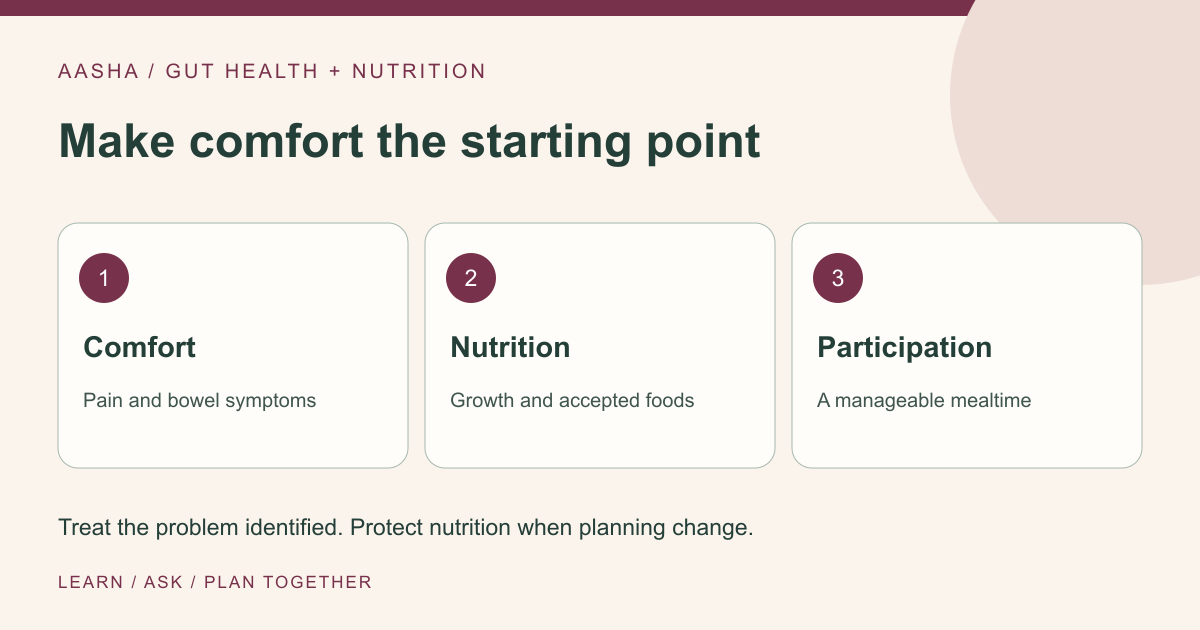
Ask the team to separate immediate comfort, nutritional needs and longer-term feeding goals. Clarify which professional will manage each issue and what should prompt a call. A plan might address constipation first, assess growth and then work gradually on meal participation; the order should reflect the child’s needs.
The aim is a child who is more comfortable and better nourished, and a family that understands what to do next. Birth mode, early feeding choices and past antibiotic use should not be turned into a story of parental blame. Bring the history honestly, seek treatment for current symptoms and judge progress by meaningful changes rather than promises that a diet will reverse autism.