
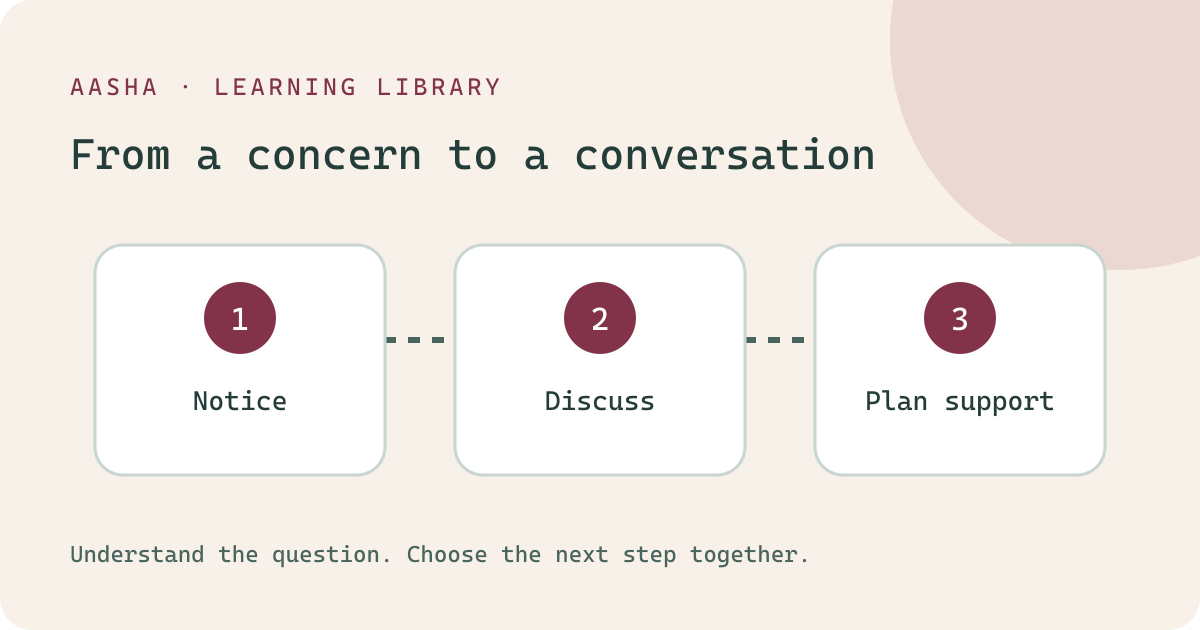
Before the visit: choose your main question
Write the concern in one sentence, then add one recent example. “My child struggles with transitions” becomes more useful when followed by “Leaving the playground takes about 20 minutes and often ends in tears, even after a verbal warning”. Describe the setting and what adults tried, without assigning blame.
Choose up to three questions you most want answered. Separate an urgent medical change from a longer-standing developmental concern. If there has been loss of skills, a seizure, sudden weakness or a child who is acutely unwell, seek appropriate medical advice promptly rather than waiting to finish this planner.
Bring a balanced picture of the child
Include enjoyable activities, successful situations and preferred ways of communicating. Mention the languages used by family members and school. A child may show different abilities with different people, so bring both accounts rather than deciding that one must be wrong.
List previous assessments, hearing or vision information if available, and current medicines and supplements. Product labels can prevent confusion over ingredients. Do not pay for a new test package just to arrive “fully prepared”; ask the clinician which investigations, if any, are needed. A concise summary is usually more useful than a large folder with no explanation of what matters.
During the appointment: clarify the recommendation
Ask what each suggested assessment or therapy is intended to answer or improve. If a term is unfamiliar, request an everyday example. Ask whether recommendations are urgent, optional or dependent on another result. If the plan is more than the family can currently manage, say so; priorities should be discussed openly.
Where possible, include the child’s views and communication preferences. Ask how information will be shared with school and what consent is needed. A report can contain sensitive family or medical information that is not necessary for every teacher. It may be more appropriate to share the relevant support recommendations rather than the entire document.
After the visit: turn advice into a next step
Record who will arrange each referral, how results will be communicated and when to review. For a home or school strategy, agree a concrete goal and how you will notice improvement or increased distress. For medicine, follow the prescriber’s instructions and clarify how to report concerns.
Keep the completed sheet somewhere private. Bring it back to the next visit and mark what happened: completed, waiting, no longer needed or unclear. The sheet is a conversation aid, not a diagnostic test, and it should reduce the family’s administrative burden rather than create another task they must perform perfectly.