
Depression & Mood Disorders · The neuroscience of self-worth
"I am a burden." The science behind this thought
It usually happens at 2 a.m. The house is quiet, the distractions of the day have evaporated, and you are left alone with the ceiling. In the dark, you begin to do the mental mathematics—and the conclusion feels less like an emotion and more like a mathematical certainty.
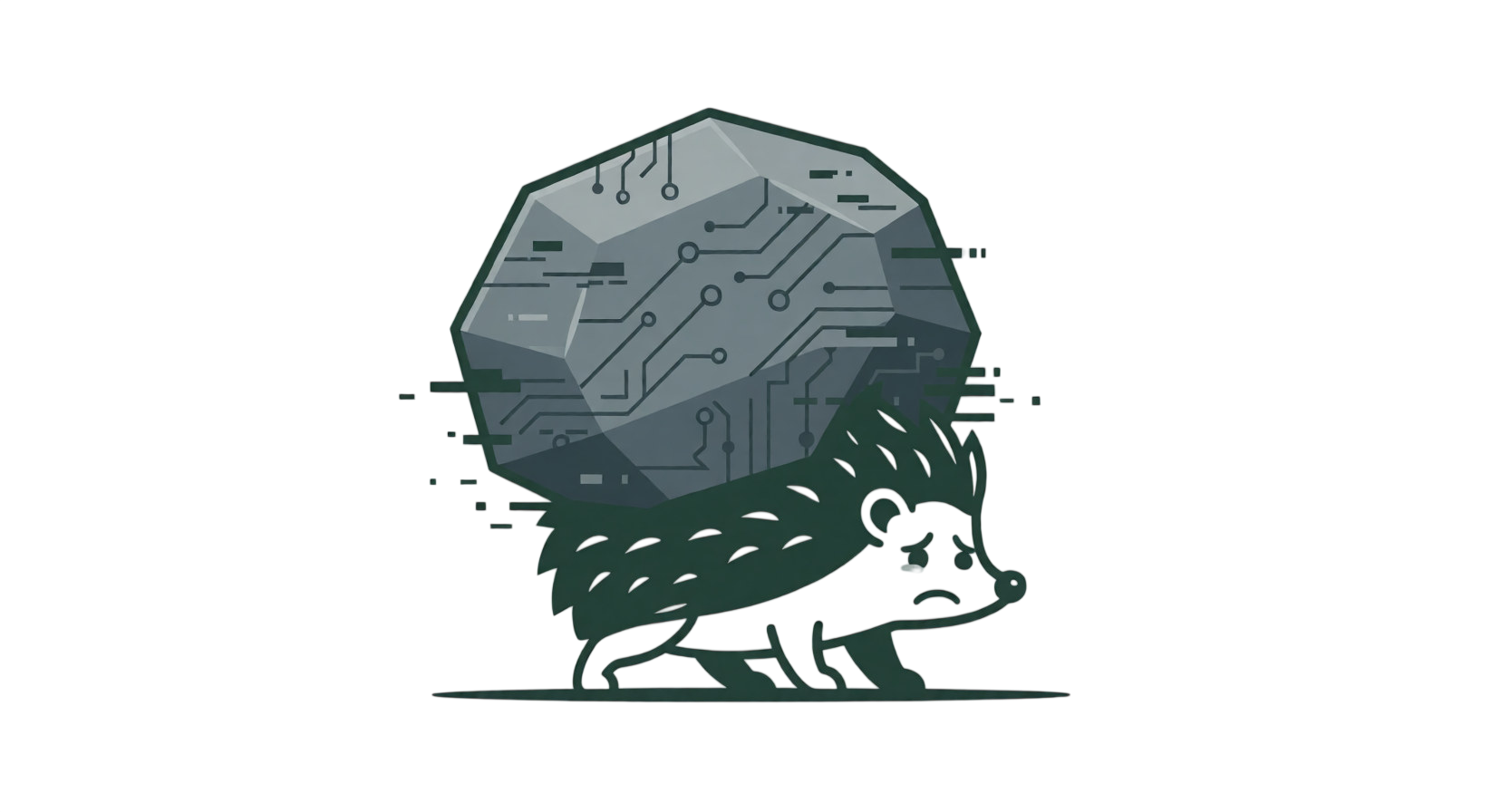
This three-part series explores the architecture of one of depression's most devastating symptoms: the conviction that your existence actively degrades the lives of those you love. We will examine why this feeling is not a profound truth but a profound symptom—a measurable neurobiological event rooted in evolutionary misfires, attachment wounds, and inflammatory cascades. Most importantly, we will provide precision tools to dismantle the trap and reclaim your identity from the burden narrative.
Part 1: The Lie Your Brain Tells You — What "Feeling Like a Burden" Actually Is
In the dark, you begin to do the mental mathematics. You calculate the emotional bandwidth you have drained from your partner. You tally the financial cost of your medical bills, your employment/unemployment, or your mere existence. You weigh the time your friends have spent worrying about you, and you subtract it from the time they could have spent thriving.
When you finish the calculation, the conclusion feels less like an emotion and more like a mathematical certainty.
If I weren't here, they would have more money. They would have more energy. They would have more peace.
What makes this thought so devastating is not just its cruelty, but its logic. It feels rational. It feels like you are finally seeing yourself clearly, stripped of the ego's usual defenses. But what if I told you that this thought—this seemingly objective, unassailable conclusion—is actually a measurable neurobiological event? What if the conviction that you are a liability is not a profound truth, but a profound symptom?
This is the first step toward reclaiming your life: understanding that the feeling of being a burden is not a reflection of your character, your worth, or your actual impact on the world. It is a glitch in the machinery of a brain under siege. To dismantle the lie, we must first understand the architecture of the illusion.
Naming the Beast: The Clinical Reality of Perceived Burdensomeness
To understand what is happening to you, we have to look to the Interpersonal Theory of Suicide, a foundational framework developed by Dr. Thomas Joiner and extensively validated by decades of clinical research. Within this model, the specific agony you are experiencing has a name: perceived burdensomeness.
It is crucial to distinguish this from general guilt, shame, or low self-esteem. Guilt says, I did something bad. Shame says, I am bad. But perceived burdensomeness is far more specific and far more dangerous. It is the fixed, unshakeable conviction that your existence actively degrades the lives of those you love. It comprises two distinct facets: liability beliefs (the sense that you are a drain on others' resources, time, and energy) and self-hatred (the affective, painful realization that you are useless or expendable).
Research mapping this construct reveals a staggering statistic: perceived burdensomeness mediates nearly seventy percent of the variance between depression and suicidal ideation. It is not merely a side effect of feeling down; it is the primary engine of existential despair.
Yet, the most important word in the clinical term is perceived. The research literature deliberately classifies it as a misperception. It is not a stable personality trait; it is a dynamic, fluid cognitive-affective state. It fluctuates based on your environment, your biology, and your relationships. Recognizing this distinction is your first anchor. You are not inherently a burden. You are currently experiencing a state of perceived burdensomeness. And states, unlike traits, can be changed.
The Neurobiological Architecture: Why the Lie Feels So True
For decades, the public understanding of depression was reduced to a simplistic "chemical imbalance" narrative—the idea that you just lacked enough serotonin. While neurotransmitters like serotonin, dopamine, and norepinephrine play a role in mood regulation, modern neuroscience reveals a far more complex, structural reality. Feeling like a burden is not just a chemical soup problem; it is the result of specific neural networks and biological pathways misfiring in unison.
The Default Mode Network and the Trap of Rumination
Deep inside your brain is a network of interacting structures known as the Default Mode Network, or DMN. This is the brain's self-referential system. It is the network that activates when you are daydreaming, remembering the past, or thinking about yourself. In a healthy brain, the DMN is like a useful tool that you can pick up and put down. But in the state of perceived burdensomeness, the DMN becomes hyperconnected and stuck in overdrive. It generates relentless, self-referential thought loops. You are not thinking; you are being trapped in a recursive cycle of self-criticism. The DMN produces thoughts that feel like profound, objective insights about your worthlessness, but they are actually just neurological noise. The network is stuck, and it is feeding you data that confirms its own broken state.
The Anterior Insula and the Physical Agony of Social Pain
Perhaps the most validating discovery in modern social neuroscience is why feeling like a burden physically hurts. When you think the thought, I am a burden, you likely feel a heaviness in your chest, a tightness in your throat, or a profound, leaden exhaustion. This is not a metaphor. Neuroimaging studies show that the experience of social exclusion and perceived burdensomeness activates the dorsal anterior cingulate cortex and the anterior insula. These are the exact same neural regions that process the sensory and affective components of physical pain. Your brain does not distinguish between the agony of a burned hand and the agony of feeling like a liability to your family. When you feel like a burden, your nervous system is registering a physical injury. This interoceptive overlap explains why well-meaning platitudes like "you're not a burden" fail so miserably. You are arguing with a thought, but the person's body is experiencing a wound.
Inflammatory Pathways and the "Sickness Behavior" Misfire
Finally, we must look at the immune system. Chronic psychological stress dysregulates the HPA axis—the body's central stress response system—which in turn triggers systemic inflammation. Elevated inflammatory cytokines prompt the brain to initiate what evolutionary biologists call "sickness behavior." This is a biological program designed to make you lethargic, withdraw from social contact, and lose your appetite so that your body can fight off an infection.
But here is the cruel trick: when your body forces you into sickness behavior, your conscious mind observes this withdrawal and invents a narrative to explain it. You notice that you are isolating yourself, that you have no energy, and that you are pulling away from your loved ones. Your brain concludes, I am withdrawing because I am a burden. In reality, the inflammation came first. The biological withdrawal came second. The narrative of burdensomeness is simply the story your mind tells to make sense of your immune system's misfire.
These three systems feed each other in a closed loop. The DMN generates ruminative stress, which activates the HPA axis, which causes inflammation, which drives physical and social withdrawal, which the DMN then interprets as further evidence that you are a liability. It is a perfect, self-sustaining engine of despair.
The Evolutionary Misfire: An Algorithm for a Dead World
If this neurobiological machinery is so destructive, why did we evolve to have it? To truly dismantle the shame of feeling like a burden, we have to look to evolutionary psychology. The human brain did not evolve to make you happy; it evolved to keep you alive, and more importantly, to keep your genetic kin alive.
This brings us to the Inclusive Fitness Model. In the harsh, resource-scarce environments of the Pleistocene era, tribal survival depended on strict resource allocation. Every calorie mattered. If an individual was severely injured, chronically ill, or otherwise a net drain on the tribe's resources, their presence threatened the survival of their genetic kin. Evolutionary psychologists hypothesize that the brain developed "perceived burdensomeness" as a maladaptive signal for this exact scenario. The dark, counterintuitive evolutionary logic was that if you perceived yourself as a burden, you might be motivated toward self-removal, thereby increasing the "inclusive fitness" of your family by freeing up resources for them.
This is the ghost in your machine. The feeling of being a burden is an ancient, adaptive survival algorithm that has catastrophically misfired in the modern world.
You are not facing the immediate, caloric starvation of your genetic kin. In modern society, human value is not strictly transactional, and the "drain" you perceive is not real in the way the algorithm assumes. Your presence provides non-transactional, intrinsic value to your social network—value that no ancestral environment could have possibly selected for or measured.
When you feel like a burden, you are not accessing a profound moral truth. You are experiencing the friction of a brain running ancient, tribal software in a complex, modern world. The feeling is not wisdom. It is a glitch. It is an evolutionary misfire, sounding an alarm for a threat that no longer exists.
The First Reframe
Feeling like a burden is a profound deception orchestrated by a brain under physiological and structural stress. It is generated by the hyperactive rumination of the Default Mode Network, amplified by the physical pain signals of the anterior insula, fueled by the inflammatory withdrawal of the immune system, and rooted in an evolutionary algorithm that no longer applies to your life.
It is, by definition, a misperception. It is a medical event, not a moral verdict.
But intellectual understanding, as comforting as it can be, is not a cure. You can read the neuroscience, you can map the evolutionary misfire, and you can logically deduce that you are not a burden—and yet, at 2 a.m., the feeling will still return. The heaviness in your chest will still ache.
Why? Because perceived burdensomeness does not just live in the isolated circuits of your skull. It leaks out. It infects your relationships, it shapes your identity, it alters your body, and it is amplified by the culture around you. Most dangerously, it acts as a self-fulfilling prophecy, actively engineering the very rejection it fears.
Knowing it is a misperception is the vital first step. But to truly dismantle the trap, we have to look at how this neurobiological glitch interacts with the people you love, the culture you inhabit, and the deepest wounds of your history. That is where the real work begins. That is what we unpack next.
Ready to break free from the burden narrative? Our clinicians specialize in evidence-based treatments for perceived burdensomeness, including Compassion-Focused Therapy and ACT. Book an appointment today and start reclaiming your worth.
Part 2: The Trap — How Feeling Like a Burden Poisons Your Relationships, Your Identity, and Your Body
So you now know the feeling is a neurobiological event, not an objective truth. You have read the science. You understand the evolutionary misfire, the hyperactive loops of the Default Mode Network, and the inflammatory cascades that mimic social withdrawal. You logically deduce that you are not a liability. And yet, when the house goes quiet and the ceiling stares back at you, the feeling remains. It might even feel heavier than before.
Why? Because intellectual insight, while a vital first step, is not a cure. Perceived burdensomeness is not merely a ghost haunting the isolated circuits of your skull. It is a highly contagious, systemic force. It leaks out of your nervous system and infects your relationships, it shapes your core identity, it alters your physical body, and it is amplified by the culture around you. Most dangerously, it acts as a self-fulfilling prophecy engine, actively engineering the very rejection it fears. To understand why this feeling is so impossibly sticky, we have to look at how this neurobiological glitch interacts with the people you love, the deepest wounds of your history, and the society you inhabit.
The Cruel Paradox of the Self-Fulfilling Prophecy
The most tragic irony of perceived burdensomeness is that the very behaviors it triggers to protect you from rejection actually manufacture that rejection. In clinical psychology, this destructive cycle is mapped by Coyne's Interactional Theory of Depression. It reveals how the feeling of being a burden creates a closed loop that perpetuates its own existence, trapping both the individual and their loved ones in a web of mutual exhaustion.
The cycle almost always begins with a spike in anxiety. Feeling like a liability, your brain's threat-detection system goes into overdrive, scanning your environment for confirmation of your worst fear. Seeking relief from this terrifying uncertainty, you reach out to a loved one. You might ask for direct reassurance—"Are you mad at me?" or "Am I bothering you?"—or you might subtly test the relationship by withdrawing slightly to see if they notice and pursue you.
Initially, your partner, friend, or caregiver responds with warmth and support. But human beings have finite emotional bandwidth. Over time, the relentless need for reassurance, or the confusing push-and-pull of your withdrawal, begins to exact a toll. The caregiver experiences compassion fatigue. They might let out a subtle sigh, their eye contact might break for a fraction of a second, or their tone might carry a microscopic edge of exhaustion.
Your hyper-vigilant nervous system instantly detects this micro-expression. It does not register it as normal human fatigue; it registers it as definitive, empirical proof. See? your brain whispers. I am a burden. I am draining them.
In response, you do what the algorithm dictates: you withdraw further to "protect" them from your toxicity. You stop calling. You isolate. You hide your struggles. But this withdrawal creates genuine relational distance. Your loved one feels confused, shut out, and eventually frustrated by your unexplained absence. Their frustration confirms your original belief, and the loop accelerates. This is not a moral failing on your part, nor is it a failure of your loved one's love. It is a systemic trap. You are running a threat-detection protocol that mistakes the normal limitations of human endurance for evidence of your own worthlessness. The more you try to protect others from your burden, the more isolated you become, and the heavier the burden feels.
The Developmental Blueprint: Attachment and the Seed of "Too Much"
To understand why your brain is so quick to adopt this destructive loop, we have to look backward. The susceptibility to perceived burdensomeness is rarely born in adulthood; it is usually seeded in early childhood through the formation of what attachment theorists call "internal working models."
When you are an infant, your survival depends entirely on your caregivers. If those caregivers were consistently overwhelmed, emotionally unavailable, depressed themselves, or punitive in response to your needs, your developing brain had to draw a conclusion to make sense of the environment. Children cannot survive believing their caregivers are inherently bad or unreliable; instead, they conclude that they are the problem. The child's brain draws a survival-level blueprint: My needs are too much. My existence requires management. If I express my pain, I will be abandoned.
This schema lies dormant during the functional years of early adulthood. But when you encounter a major life stressor—a job loss, a chronic illness diagnosis, a breakup, or simply the crushing weight of burnout—your attachment system is activated. You become vulnerable, and you need care. Instantly, that childhood blueprint overrides your adult reality.
You preemptively withdraw and self-silence. You minimize your needs. You apologize for taking up space. You are not doing this because you are currently a burden to your partner or friends. You are doing this because your nervous system is bracing for the childhood-era rejection it expects to follow any request for support. The narrative of "I am a burden" is simply the story your attachment system tells when it is terrified of abandonment but cannot tolerate the vulnerability of asking directly for care. It is a protective mechanism, forged in childhood, that has outlived its usefulness.
The Neurodivergent Dimension: Masking as Moral Failure
For a significant and often invisible population, the feeling of being a burden is not just a symptom of depression; it is the direct, exhausting result of navigating a world built for a different neurology. Autistic individuals, those with ADHD, and others with neurodivergent profiles frequently engage in "masking." This is the conscious or unconscious suppression of natural neurodivergent traits and the performative mimicry of neurotypical social behaviors to avoid friction, stigma, or rejection.
Masking is not merely "acting." It is a massive, continuous cognitive and emotional expenditure. It requires monitoring your own facial expressions, suppressing stims, forcing eye contact, and manually processing social cues that neurotypical people process intuitively. It is the equivalent of manually operating every single function of a car that others drive on autopilot.
When the inevitable burnout arrives and the mask slips, the individual's authentic self emerges, often accompanied by an increased need for accommodation or a decrease in social performance. Because they have spent a lifetime receiving implicit or explicit messages that their natural neurology is "too much," "disruptive," or "inappropriate," they internalize the resulting social friction as evidence of a fundamental character flaw.
The nervous system of a masked neurodivergent individual interprets the sheer, leaden fatigue of performing a false self as moral failure. The internal narrative shifts from I am exhausted from translating myself into a language that wasn't built for me to I am inherently defective, and therefore I am a burden to everyone around me. In this context, perceived burdensomeness is a profound mislabeling of systemic exhaustion and ableist conditioning. It is the tragic cost of trying to fit a square peg into a round hole and blaming the peg for the friction.
The Body Keeps the Score: Somatic and Chronic Pain Realities
We often speak of perceived burdensomeness as a cognitive distortion, but this ignores the profound somatic reality of the experience. As we explored in Part 1, the anterior insula and the dorsal anterior cingulate cortex process social pain and physical pain using the exact same neural architecture. When you feel like a burden, your body literally aches.
This interoceptive overlap becomes a devastating trap for individuals living with chronic pain, chronic illness, or physical disabilities. When the body is in constant pain, it demands care. It limits your ability to contribute in the expected, traditional ways. It forces you to rest, to cancel plans, to rely on others for basic tasks.
The brain's ancient, evolutionary algorithm observes this physical limitation and the resulting social withdrawal, and it outputs the "burden" narrative. The conscious mind observes the body's failure to perform and concludes, I am a liability. But this is a catastrophic misinterpretation of biology. The perceived burdensomeness in chronic illness is not a reflection of your actual value; it is the friction between your physical reality and a society that conflates human worth with physical productivity.
Furthermore, the feeling of burdensomeness becomes a full-body state. The chronic stress of feeling like a liability keeps the sympathetic nervous system engaged. You experience muscle tension, gut dysregulation, shallow breathing, and sleep disruption. These are not mere side effects of feeling sad; they are the physiological architecture of the burden narrative. Your body is locked in a state of defensive armor, bracing against a social threat that exists primarily in the misfiring circuits of your own mind.
Culture, Shame, and the Collectivist Amplifier
The trap of perceived burdensomeness is not just biological and relational; it is deeply cultural. The society you live in pours gasoline on the neurobiological misfire, providing a ready-made vocabulary for your self-hatred.
In hyper-individualistic Western cultures, human worth is frequently and inextricably conflated with economic productivity, independence, and self-reliance. When you lose a job, get sick, or simply need emotional help, the cultural narrative does not say, "This is a temporary hardship inherent to the human experience." The cultural narrative whispers, "You are failing. You are not pulling your weight." The individualistic framework readily agrees with the brain's burden algorithm, transforming a temporary state of need into a permanent identity of failure.
Conversely, in collectivist cultures, where identity is deeply relational and intertwined with family honor, the mechanism is different but equally devastating. In these contexts, perceived burdensomeness is heavily mediated by interpersonal shame and the fear of dishonoring the family. Needing help is not just a personal failing; it is a disruption of relational harmony and a stain on the family's honor.
Cross-cultural research reveals a startling reality: the link between perceived burdensomeness and suicidal ideation can actually be stronger in collectivist societies than in individualistic ones. Why? Because in an individualistic culture, the broader society at least nominally resists the idea that you are a burden, offering a counter-narrative of inherent individual rights. But in a collectivist framework, the cultural environment actively agrees with the burdensomeness narrative. The culture tells you that your neediness is a dishonor, confirming the brain's darkest fears with the full weight of societal expectation. In both systems, culture does not create the feeling, but it provides the perfect, inescapable architecture to sustain it.
The Trap Mapped
Perceived burdensomeness is not just a thought you can simply choose to stop thinking. It is a relational pattern that engineers its own confirmation. It is an attachment wound that equates vulnerability with abandonment. It is a somatic state that translates physical limitation into moral failure. It is a cultural narrative that conflates human worth with endless productivity. And for neurodivergent individuals, it is the exhausting misinterpretation of systemic masking.
The trap is total. It lives in your neurons, your relationships, your muscles, and your culture. No wonder "just think positive" doesn't work. You cannot out-think a trap that is actively rewriting your reality from the inside out.
But the trap has exits. Multiple ones. And they are more precise, more compassionate, and more scientifically grounded than anything you've been told before. You do not need to fight the trap; you need to dismantle its architecture. That is where we go next.
Struggling with chronic illness or neurodivergent masking? Our team offers specialized assessments for ADHD, autism, and trauma-informed care. Learn more about our assessment services and find clarity on your unique experience.
Part 3: The Way Out — Precision Tools for Reclaiming Your Identity From the Burden Narrative
You have likely been told to challenge your thoughts. You have been advised to make a gratitude list, to "remember your worth," or to simply "think positive." And you have likely found that these well-meaning suggestions either do not work at all, or they work for exactly ten minutes before the heavy, leaden feeling returns like an inevitable tide.
It is not your fault that these tools fail. They fail because they target the surface cognition without addressing the underlying architecture. You cannot out-think a hyperactive Default Mode Network. You cannot logic your way out of an anterior insula pain signal. You cannot "gratitude" your way out of a relational self-fulfilling prophecy or an inflammatory sickness response. When the trap is this total, the exit requires precision. You do not need generic positivity; you need interventions that match the exact biological, relational, and somatic machinery of the problem.
Targeted Cognitive Interventions: Generating Disconfirming Data
Standard cognitive restructuring often falls flat when applied to perceived burdensomeness because the brain's threat-detection system simply dismisses positive affirmations as "polite lies." To bypass this, clinical researchers have developed brief, modular cognitive-behavioral interventions specifically designed to target the burden narrative.
This begins with identifying the specific cognitive distortions unique to burdensomeness, such as mind-reading ("They are secretly exhausted by me") or emotional reasoning ("I feel heavy, therefore I am a heavy burden"). But cognitive debate is only half the equation. The other half is behavioral.
Therapeutic protocols utilize "behavioral contribution tasks"—planning and executing specific, manageable activities that contribute to others' well-being. The goal here is not to "prove" you are not a burden through exhaustion, but to generate disconfirming experiential data that the Default Mode Network cannot easily dismiss. Furthermore, because your internal monitoring system is currently compromised, clinicians utilize the "Loved One Letter" task. Trusted friends, partners, or family members write specific, detailed accounts of how you have contributed to their lives, what you mean to them, and the ways you have enriched their world. This externalizes the data. When the algorithm tells you that you are a liability, you do not argue with it; you simply read the empirical data provided by the people who actually know you.
Changing Your Relationship With the Thought: Cognitive Defusion
While cognitive-behavioral therapy asks you to prove the thought wrong, Acceptance and Commitment Therapy (ACT) asks you to change your relationship with the thought entirely. The objective is not to never have the thought again—that is an impossible standard for a human brain. The objective is to strip the thought of its command authority over your behavior.
This is achieved through a technique called cognitive defusion. When the thought arises, you deliberately alter the language. "I am a burden" becomes "I am having the thought that I am a burden." With practice, it expands further: "I am noticing that my brain is generating the 'I am a burden' thought again. That is just the Default Mode Network doing its thing."
By adding this layer of observational distance, you transform the thought from a terrifying absolute truth into a transient neurological event. You realize that you can have the thought and still call a friend. You can carry the thought and still show up. You can feel the weight of it and still exist unapologetically in a shared space. The thought loses its power not because it disappears, but because you stop obeying its commands.
Compassion, Parts, and the Physiology of Soothing
To truly dismantle the burden narrative, we must address the physiological state of the nervous system. Compassion-Focused Therapy (CFT) posits that perceived burdensomeness is driven by an overactive "threat system"—the ancient alarm bell generating shame, self-criticism, and anxiety—and a severely underactive "soothing system." You cannot think your way out of an overactive threat system; you must physiologically activate the soothing system. CFT utilizes specific interventions, like soothing rhythm breathing and compassionate imagery, to deliberately stimulate the parasympathetic nervous system. Research consistently shows that self-compassion is strongly and inversely correlated with perceived burdensomeness. Building your capacity for self-soothing is a biological antidote to the threat of self-hatred.
Simultaneously, parts-based psychotherapies like Internal Family Systems (IFS) offer a profound reframe. In this model, the "I am a burden" belief is not your core identity; it is a protective mechanism. It is held by a young, vulnerable part of your psyche—an "Exile"—that carries early shame and the fear of abandonment. This Exile is guarded by "Manager" parts that enforce isolation, self-silencing, and people-pleasing to prevent you from being rejected by your tribe.
Instead of fighting the burden narrative, IFS teaches you to externalize it. You learn to recognize the burden voice as a misguided protector. You can thank it for trying to keep you safe from social rejection, and then gently update its information: "We are not in the ancestral tribe anymore. The algorithm is wrong. We are safe now, and you can stand down."
Somatic and Relational Interventions: Rewiring the Loop
Because the feeling of burdensomeness is encoded in the body and enacted in relationships, the healing must also be somatic and relational.
When the physical ache of the anterior insula flares up, practice somatic validation. Name the body event without attaching a moral judgment to it. Tell yourself, "My nervous system is firing a social pain signal right now. This is a physiological event, not an objective assessment of my worth." This is far more validating than telling yourself "don't feel that way." It acknowledges that your body is doing something real; it just corrects the narrative your mind is using to explain it.
To break the cruel interactional loop of Coyne's theory, you must change how you communicate your distress. Stop seeking reassurance, which inevitably triggers compassion fatigue in your loved ones. Instead, state your underlying attachment need directly. Say, "My attachment system is activated right now and I feel like a burden. I don't need you to fix it, and I don't need you to deny it. I just need you to sit with me for ten minutes." This short-circuits the self-fulfilling prophecy, replacing the exhausting push-and-pull of reassurance-seeking with clear, manageable connection.
For neurodivergent readers, the intervention requires auditing the mask. When the exhaustion hits, ask yourself: "Am I actually a burden to the people I love, or am I just profoundly exhausted from translating myself into a language that wasn't built for me?" Recognizing the difference between systemic fatigue and moral failure is a vital act of self-preservation.
The Pharmacological Frontier: Disrupting the Rigidity
For some, the neural pathways of perceived burdensomeness have become so entrenched that psychological interventions alone feel like trying to reroute a river with a spoon. This is where working with a psychiatrist becomes essential.
In India, modern psychiatric care offers evidence-based medication options that can act as profound disruptors of entrenched neural frameworks. Certain antidepressants and adjunctive medications prescribed by qualified psychiatrists can help dampen the hyperactive Default Mode Network and restore neural plasticity. These medications do not erase your history, but they can create a critical window of psychological flexibility. They loosen the rigid grip of the "I am a burden" narrative, creating a biological opening where new, healthier patterns of connection and self-worth can finally take root.
Working with a qualified psychiatrist in India can help you explore whether medication might be an appropriate part of your recovery journey, alongside therapy and lifestyle interventions. The key is finding a practitioner who understands the neurobiological underpinnings of perceived burdensomeness and can tailor treatment to your specific needs.
The Operational Decision Rules
To synthesize this vast architecture into a usable framework, here are four operational decision rules to guide you when the trap snaps shut.
Rule 1: Isolate the Symptom. When the thought arises, immediately label it. State explicitly to yourself that this is a symptom of Default Mode Network hyperactivity and inflammatory sickness behavior, not an objective assessment of your value. Separate the biological signal from the moral verdict.
Rule 2: Reject the Evolutionary Misfire. Remind yourself that this feeling is an ancient, misfiring algorithm designed for a Pleistocene tribal environment that no longer exists. Your presence has intrinsic, non-transactional value to your social network, and you are not a drain on their survival.
Rule 3: Break the Interactional Loop. Stop seeking reassurance, which only feeds the cycle of compassion fatigue. Instead, state your underlying attachment need directly to your loved ones, short-circuiting the self-fulfilling prophecy and allowing for genuine connection.
Rule 4: Externalize the Data. Accept that you are a poor judge of your own impact while in this state. Ask trusted people directly for the empirical truth about your value to them, and consciously choose to let their external data override your internal narrative.
The Reclamation
Feeling like a burden is a profound deception orchestrated by a brain under physiological and structural stress. It is a neurobiological misfire, an evolutionary glitch, a relational trap, and a cultural narrative that was never true.
You are not a burden. You are a system—a magnificent, complex, ancient, glitchy, beautiful system—that is experiencing temporary misfiring. You require repair, not judgment. You require understanding, not shame. You require presence, not performance.
The feeling will come back. The Default Mode Network will fire. The anterior insula will ache. The evolutionary ghost will whisper its ancient, obsolete logic. But now, when it does, you will know exactly what it is. And knowing what it is, recognizing it as the mechanical grinding of a stressed nervous system rather than the truth of your soul, is the first, most powerful step toward not believing it.
You were never the burden. The burden was the lie. And lies, unlike truths, can be dismantled.
If you or someone you know is struggling with thoughts of being a burden or suicidal ideation, please seek professional help immediately. In India, contact Kiran Mental Health Helpline (1800-599-0019) or iCall (9152987821). For emergency psychiatric care, visit our emergency resources page. You are not alone, and help is available.
Ready to start your journey toward healing? Our experienced psychiatrists and therapists offer personalized treatment plans for depression, trauma, and perceived burdensomeness. Schedule your consultation today and take the first step toward reclaiming your life.